
Historical Places With Own History
Lost Secrets of Petra: How an Ancient Desert Civilization Carved a Hidden Empire Into Solid Stone
Two thousand years ago, in one of the driest canyons on Earth, the Nabataeans built a thriving metropolis of gardens, fountains, and monumental temples—using hydraulic engineering so advanced it still amazes modern scientists.
Nazmul Islam · Nov 21, 2026
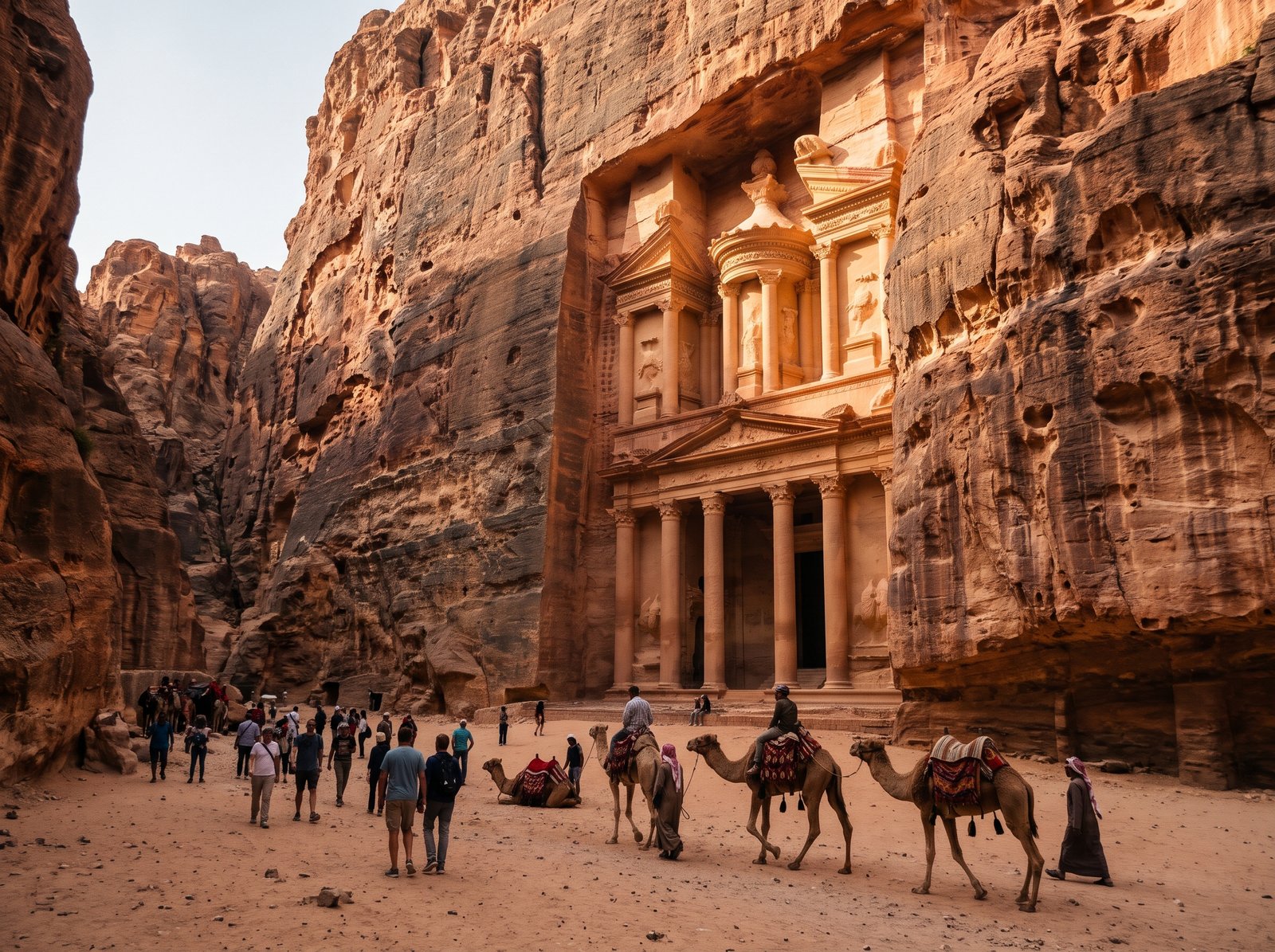
Imagine walking for more than a mile through a narrow, twisting chasm where towering sandstone cliffs block out almost all direct sunlight. Suddenly, the canyon walls part, revealing a 130-foot-tall classical facadeâÂÂcomplete with Corinthian columns, sculpted deities, and intricate friezesâÂÂcarved seamlessly into the living pink rock.
This is Petra, in southern Jordan. For nearly six centuries, its exact location remained hidden from the outside world, guarded by local Bedouin tribes. Yet in its prime during the 1st century BCE and 1st century CE, Petra was no isolated outpost. It was the glittering capital of the Nabataean Kingdom, home to an estimated 20,000 to 30,000 residents, and the indispensable hub of the ancient incense and spice trade (UNESCO World Heritage Centre).
[CMS & YouTube Production Note]: This narrative arc (The Hook â Trade Monopoly â Hidden Water System â Top-Down Carving â Economic Collapse) is structured to double as a 10âÂÂ12 minute documentary script for your upcoming history YouTube channel. Once the video is published, paste its YouTube embed link right here.Act I: How Desert Nomads Built a Trade Monopoly
Around the 4th century BCE, a nomadic Arab tribe known as the Nabataeans migrated into the rugged mountains of southern Jordan. Rather than attempting to conquer neighboring empires by force, they mastered something far more profitable: geography and logistics.
Petra sat at the strategic intersection of the ancient world's most valuable overland trade routes, linking southern Arabia, Egypt, Syria, and the Mediterranean basin. Caravans hauling frankincense, myrrh, Indian spices, Chinese silk, and Dead Sea bitumen had to pass through Nabataean territory. By offering armed protection, safe canyon shelter, and reliable water supplies in exchange for customs taxes, the Nabataeans accumulated extraordinary wealthâÂÂturning a hidden desert gorge into an international financial capital.
Act II: The Invisible Secret â Hydraulic Engineering in a Desert
The greatest marvel of Petra is not the temples carved into its cliffsâÂÂit is the invisible hydraulic network hidden beneath the stone floor. Receiving less than six inches of rainfall per year, the canyon faced two opposite threats: chronic drought for eleven months, and violent flash floods during winter storms.
Nabataean engineers solved both problems simultaneously, turning destructive floodwaters into a year-round urban water supply (Ortloff, 2005):
- Flood-Diversion Tunnels and Check Dams: Before winter stormwaters could surge down the narrow Siq entrance canyon and drown the city, massive stone diversion dams redirected the flood into a rock-cut tunnel leading to an adjacent valley.
- Gravity-Fed Terracotta Aqueducts: Engineers tapped distant mountain springsâÂÂsuch as Ain MusaâÂÂand laid miles of interlocking ceramic pipes along the canyon walls at a calculated, gentle slope to prevent air locks and pipe bursts (Ortloff, 2005).
- Subterranean Cisterns and Desert Gardens: Hundreds of waterproofed underground cisterns stored millions of gallons of filtered rainwater, enabling Petra to maintain public fountains, bathhouses, and even a monumental poolside garden complex in the middle of the Arabian desert (Bedal, 2004).
Act III: Carved From the Top Down â How Petra Was Built
Unlike Rome or Athens, where masons stacked cut stone blocks upward from a foundation, Petra's architects worked in reverseâÂÂcarving monumental structures from the top down out of solid sandstone cliffs.
To sculpt Al-Khazneh, stonemasons first cut narrow horizontal ledges and vertical climbing niches into the upper cliff face, then chiseled downward layer by layer using iron pickaxes and wooden scaffoldingâÂÂleaving zero margin for error, since a single miscalculated strike could ruin an irreversible stone column.
Act IV: Why Was Petra Abandoned and Forgotten?
Petra's downfall was driven by the same force that created its fortune: shifting global trade economics. After the Roman Empire annexed the Nabataean Kingdom in 106 CE as the province of Arabia Petraea, Roman merchants increasingly favored maritime shipping routes across the Red Sea and northern overland routes through Palmyra, bypassing Petra's desert tollgates.
Nature delivered the final blow. In 363 CE, a catastrophic earthquake destroyed nearly half the city, shattering its delicate ceramic water pipelines and collapsing major temples. A second severe earthquake in 551 CE devastated what remained. Without its engineered water supply, urban life became impossible. By the 7th century CE, Petra was largely abandoned, fading from European maps until Swiss explorer Johann Ludwig BurckhardtâÂÂtraveling in disguiseâÂÂdocumented the ruins in 1812 (UNESCO World Heritage Centre).
Frequently Asked Questions (FAQ)
Why was Petra built inside a canyon instead of on open land?
The surrounding sandstone cliffs acted as a natural military fortress with narrow, easily defended entrances, provided shade from extreme desert heat, and served as giant natural catchment surfaces for harvesting seasonal rainwater.
How did the Nabataeans stop flash floods from destroying Petra?
They constructed a diversion dam at the entrance of the Siq gorge paired with a 280-foot tunnel carved straight through the mountain, safely rerouting floodwaters away from the city center while storing excess water in underground cisterns (Ortloff, 2005).
Is Petra actually built out of solid stone inside?
Yes. While the exteriors feature ornate classical facades, the interiors are vast, unadorned rectangular chambers hollowed directly out of the sandstone mountainâÂÂoriginally serving as royal tombs, banquet halls, and ceremonial spaces.
Sources & Archaeological References
- UNESCO World Heritage Centre. Petra (Hashemite Kingdom of Jordan) â World Heritage List. https://whc.unesco.org/en/list/326/
- Ortloff, C. R. The Water Supply and Distribution System of the Nabataean City of Petra (Jordan), 300 BCâÂÂAD 300. Cambridge Archaeological Journal, 15(1), 93âÂÂ109.
- Bedal, L.-A. The Petra Pool-Complex: A Hellenistic Paradeisos in the Nabataean Capital. Gorgias Press.