
AI Present & Future
Why the $1 Trillion AI Infrastructure Boom Is Hitting a Power Wall
Nazmul Islam · Nov 26, 2026
Artificial intelligence is often marketed as weightless software living somewhere in the cloud. In reality, modern AI is one of the heaviest industrial undertakings in human history. Behind every frontier model query sits a sprawling physical network of high-density silicon, specialized liquid cooling loops, massive transformers, and gigawatt-scale power stations.
Right now, that physical foundation is running straight into an **AI infrastructure power bottleneck**. While Big Tech hyperscalers are deploying unprecedented capital to build massive compute clusters, national electrical grids in the United States and Europe simply cannot expand fast enough to keep up.
To understand why power grids are straining, look at the sheer velocity of capital entering the sector. According to International Energy Agency (IEA) tracking, combined capital expenditures by major hyperscalersâÂÂincluding Alphabet, Amazon, Meta, Microsoft, and OracleâÂÂsurged past $355 billion in 2025 and have continued climbing sharply through 2026 on a trajectory toward $1 trillion in cumulative AI infrastructure spending.
Unlike traditional cloud servers built for web hosting or file storage, AI training and inference clusters require extreme power density. A single modern AI server rackâÂÂroughly the size of a commercial refrigeratorâÂÂcan weigh more than a pickup truck and draw over 100 kilowatts of continuous electricity.
| Metric | 2024 Baseline | 2026 Current Trajectory | 2030 Projection (IEA) || :--- | :--- | :--- | :--- || **Global Data Center Electricity** | ~415 TWh | ~545+ TWh | ~945 TWh || **AI Share of Data Center Power** | ~15âÂÂ20% | ~33âÂÂ37% | ~46% || **Largest Single Campus Load** | 100âÂÂ300 MW | >1 GW Continuous | 2âÂÂ5 GW Multi-Campus |
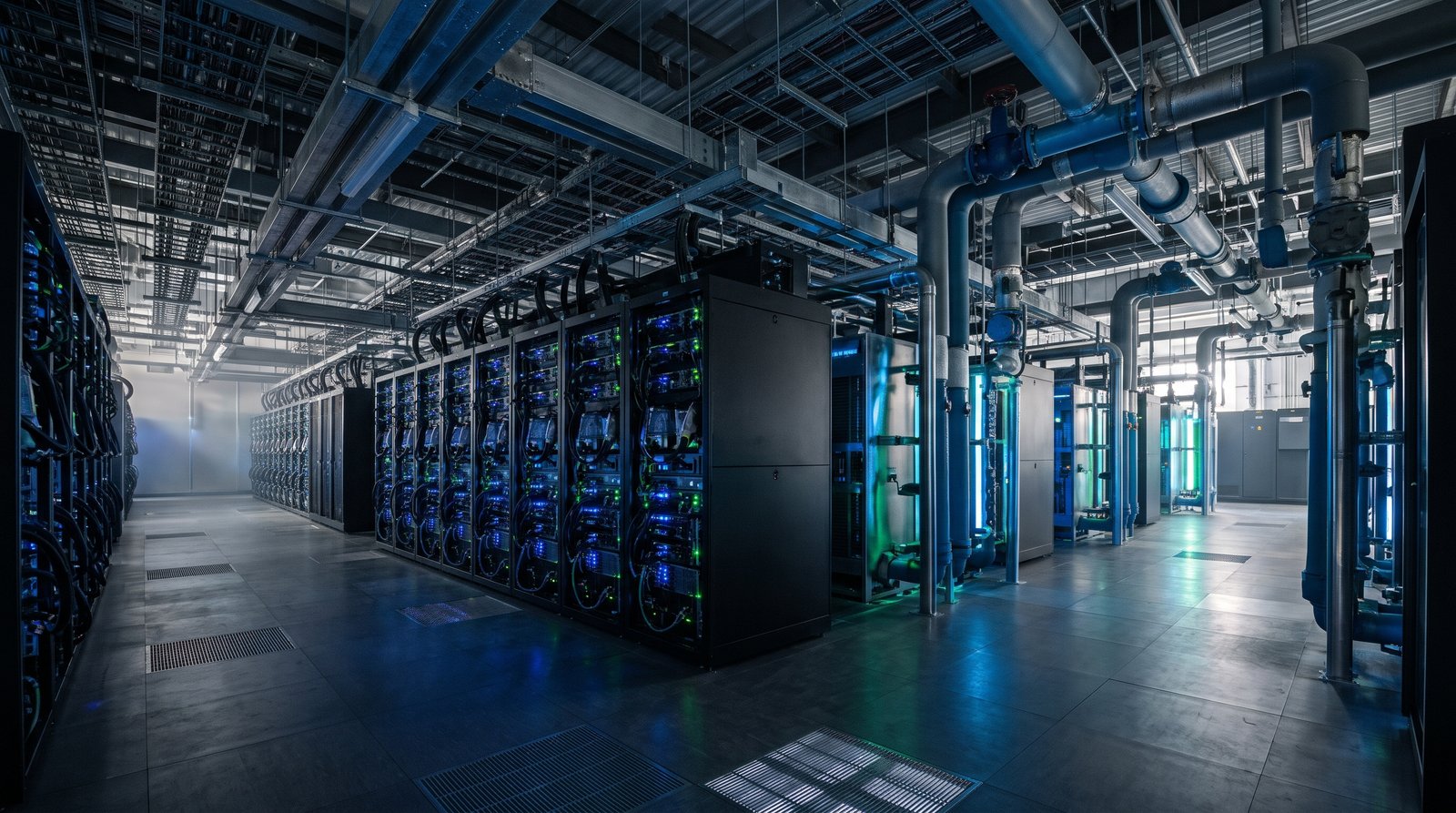
In the United States alone, the largest AI campuses now consume more than **1 gigawatt (GW)** of continuous electricityâÂÂenough to power a mid-sized American city around the clock.
Building a hyperscale data center shell takes roughly 18 to 24 months. Building the high-voltage transmission lines, substations, and baseload power plants required to feed it takes five to ten years.
This mismatch between fast-moving silicon deployment and slow-moving utility infrastructure has created severe interconnection queues across major computing hubs:
* **Northern Virginia (Data Center Alley):** Utility bottlenecks and transmission constraints have pushed multi-year wait times for new high-voltage hookups.* **Texas (ERCOT) & PJM Markets:** Rapidly rising industrial load has forced grid operators to tighten interconnection rules and demand flexible load commitments from tech operators.* **Europe (FLAP-D Markets):** In hubs like Ireland, data centers already consume more than 20% of the national electricity grid, triggering strict moratoriums and connection caps.
Every month a completed AI facility sits waiting for a grid connection represents millions of dollars in stranded capital and lost compute advantage.
Faced with multi-year utility delays, data center developers are increasingly bypassing public power grids altogether through **behind-the-meter (BTM)** generationâÂÂbuilding dedicated power plants directly on-site.
Research released in November 2026 by BloombergNEF (BNEF) reveals that developers have proposed **181 GW of on-site fossil-fuel power capacity** globally for data centers, with over 90% concentrated in the United States. The IEA similarly tracks roughly 47 GW of on-site natural gas projects already proposed or under active development across U.S. data center corridors.
1. **Higher Operating Costs:** According to Rocky Mountain Institute (RMI) estimates, grid electricity for large U.S. industrial buyers typically costs between $55 and $115 per megawatt-hour (MWh), whereas on-site fossil-fuel generation runs between $100 and $165 per MWh.2. **Turbine & Pipeline Backlogs:** Equipment manufacturers face multi-year order backlogs for industrial gas turbines, and even alternative setupsâÂÂsuch as fuel-cell campusesâÂÂhave experienced months-long delays waiting for natural gas pipeline connections.3. **Emissions Lock-In:** Environmental analysts warn that once multi-hundred-megawatt gas plants are built on-site, they are rarely temporary, locking in tens of millions of tonnes of annual carbon emissions for decades.
---
Electricity is only half of the physical equation. Every watt of electricity flowing into an AI GPU cluster eventually turns into heat that must be removed to prevent hardware failure.
Traditional evaporative cooling towers consume millions of gallons of municipal freshwater daily. IEA analysis indicates that nearly **40% of identified AI data center capacity** sits in regions already facing high or extremely high baseline water stress, including parts of Arizona, Iowa, Texas, and Southern Europe.
To survive stricter environmental regulations and local community pushback, operators are rapidly shifting toward **closed-loop liquid cooling**âÂÂcirculating dielectric fluid or treated water directly over hot chips in sealed pipes. While closed-loop systems cut direct on-site water evaporation by 70% to 90%, they significantly increase upfront capital expenditure and still rely on upstream water consumption at the power plants generating the electricity.
The winners of the next phase of artificial intelligence will not simply be the companies with the smartest algorithmsâÂÂthey will be the organizations that secure reliable, affordable gigawatts of power. Three structural shifts are already underway:
* **Grid-Interactive Data Centers:** Regulators are increasingly offering faster "non-firm" grid connections to data centers equipped with massive industrial lithium-ion battery storage capable of curtailing load during peak residential electricity demand.* **Nuclear & Next-Gen Baseload Deals:** Hyperscalers are signing long-term power purchase agreements (PPAs) with nuclear operators and investing in small modular reactors (SMRs) to guarantee 24/7 carbon-free baseload energy into the 2030s.* **Model Efficiency & Silicon Architecture:** Falling inference costs and specialized low-power chips are becoming essential engineering priorities, because reducing energy per token directly translates into higher compute capacity within fixed power limits.
Until grid transmission, clean baseload generation, and transformer supply chains catch up, **powerâÂÂnot codeâÂÂremains the ultimate ceiling on artificial intelligence.**
### Why is there an AI infrastructure power bottleneck right now?Data centers can be constructed in 18 to 24 months, whereas upgrading high-voltage electrical transmission lines and building new baseload power plants takes five to ten years. This timeline mismatch has created multi-year utility connection queues across major AI hubs in the U.S. and Europe.
### How much electricity do AI data centers consume globally?According to International Energy Agency (IEA) projections, total global data center electricity consumption is rising from 415 terawatt-hours (TWh) in 2024 to roughly 945 TWh by 2030, with AI accelerator workloads accounting for nearly half of total demand by the end of the decade.
### Why are AI companies building on-site gas power plants?To avoid waiting years for public utility grid connections, developers are building behind-the-meter natural gas turbines and fuel cells directly at data center campuses. Industry research tracks over 180 GW of proposed on-site fossil-fuel capacity globally, primarily in the United States.
### How does liquid cooling reduce AI data center water usage?Closed-loop liquid cooling circulates coolant directly across high-heat AI chips inside sealed pipes rather than evaporating freshwater into the air. This approach reduces direct on-site water consumption by 70% to 90%, though it requires higher upfront infrastructure investment.
Right now, that physical foundation is running straight into an **AI infrastructure power bottleneck**. While Big Tech hyperscalers are deploying unprecedented capital to build massive compute clusters, national electrical grids in the United States and Europe simply cannot expand fast enough to keep up.
The Scale of Hyperscaler AI Capital Expenditure
To understand why power grids are straining, look at the sheer velocity of capital entering the sector. According to International Energy Agency (IEA) tracking, combined capital expenditures by major hyperscalersâÂÂincluding Alphabet, Amazon, Meta, Microsoft, and OracleâÂÂsurged past $355 billion in 2025 and have continued climbing sharply through 2026 on a trajectory toward $1 trillion in cumulative AI infrastructure spending.
Unlike traditional cloud servers built for web hosting or file storage, AI training and inference clusters require extreme power density. A single modern AI server rackâÂÂroughly the size of a commercial refrigeratorâÂÂcan weigh more than a pickup truck and draw over 100 kilowatts of continuous electricity.
| Metric | 2024 Baseline | 2026 Current Trajectory | 2030 Projection (IEA) || :--- | :--- | :--- | :--- || **Global Data Center Electricity** | ~415 TWh | ~545+ TWh | ~945 TWh || **AI Share of Data Center Power** | ~15âÂÂ20% | ~33âÂÂ37% | ~46% || **Largest Single Campus Load** | 100âÂÂ300 MW | >1 GW Continuous | 2âÂÂ5 GW Multi-Campus |
In the United States alone, the largest AI campuses now consume more than **1 gigawatt (GW)** of continuous electricityâÂÂenough to power a mid-sized American city around the clock.
## Why Electrical Grids Cannot Keep Up With AI Data Center Electricity Demand
Building a hyperscale data center shell takes roughly 18 to 24 months. Building the high-voltage transmission lines, substations, and baseload power plants required to feed it takes five to ten years.
This mismatch between fast-moving silicon deployment and slow-moving utility infrastructure has created severe interconnection queues across major computing hubs:
* **Northern Virginia (Data Center Alley):** Utility bottlenecks and transmission constraints have pushed multi-year wait times for new high-voltage hookups.* **Texas (ERCOT) & PJM Markets:** Rapidly rising industrial load has forced grid operators to tighten interconnection rules and demand flexible load commitments from tech operators.* **Europe (FLAP-D Markets):** In hubs like Ireland, data centers already consume more than 20% of the national electricity grid, triggering strict moratoriums and connection caps.
Every month a completed AI facility sits waiting for a grid connection represents millions of dollars in stranded capital and lost compute advantage.
## Skipping the Grid: The Surge in On-Site Gas Power for AI Data Centers
Faced with multi-year utility delays, data center developers are increasingly bypassing public power grids altogether through **behind-the-meter (BTM)** generationâÂÂbuilding dedicated power plants directly on-site.
Research released in November 2026 by BloombergNEF (BNEF) reveals that developers have proposed **181 GW of on-site fossil-fuel power capacity** globally for data centers, with over 90% concentrated in the United States. The IEA similarly tracks roughly 47 GW of on-site natural gas projects already proposed or under active development across U.S. data center corridors.
However, self-generation carries serious trade-offs:
1. **Higher Operating Costs:** According to Rocky Mountain Institute (RMI) estimates, grid electricity for large U.S. industrial buyers typically costs between $55 and $115 per megawatt-hour (MWh), whereas on-site fossil-fuel generation runs between $100 and $165 per MWh.2. **Turbine & Pipeline Backlogs:** Equipment manufacturers face multi-year order backlogs for industrial gas turbines, and even alternative setupsâÂÂsuch as fuel-cell campusesâÂÂhave experienced months-long delays waiting for natural gas pipeline connections.3. **Emissions Lock-In:** Environmental analysts warn that once multi-hundred-megawatt gas plants are built on-site, they are rarely temporary, locking in tens of millions of tonnes of annual carbon emissions for decades.
---
## AI Data Center Water and Grid Stress
Electricity is only half of the physical equation. Every watt of electricity flowing into an AI GPU cluster eventually turns into heat that must be removed to prevent hardware failure.
Traditional evaporative cooling towers consume millions of gallons of municipal freshwater daily. IEA analysis indicates that nearly **40% of identified AI data center capacity** sits in regions already facing high or extremely high baseline water stress, including parts of Arizona, Iowa, Texas, and Southern Europe.
To survive stricter environmental regulations and local community pushback, operators are rapidly shifting toward **closed-loop liquid cooling**âÂÂcirculating dielectric fluid or treated water directly over hot chips in sealed pipes. While closed-loop systems cut direct on-site water evaporation by 70% to 90%, they significantly increase upfront capital expenditure and still rely on upstream water consumption at the power plants generating the electricity.
## What Shapes the Future of AI Computing Capacity?
The winners of the next phase of artificial intelligence will not simply be the companies with the smartest algorithmsâÂÂthey will be the organizations that secure reliable, affordable gigawatts of power. Three structural shifts are already underway:
* **Grid-Interactive Data Centers:** Regulators are increasingly offering faster "non-firm" grid connections to data centers equipped with massive industrial lithium-ion battery storage capable of curtailing load during peak residential electricity demand.* **Nuclear & Next-Gen Baseload Deals:** Hyperscalers are signing long-term power purchase agreements (PPAs) with nuclear operators and investing in small modular reactors (SMRs) to guarantee 24/7 carbon-free baseload energy into the 2030s.* **Model Efficiency & Silicon Architecture:** Falling inference costs and specialized low-power chips are becoming essential engineering priorities, because reducing energy per token directly translates into higher compute capacity within fixed power limits.
Until grid transmission, clean baseload generation, and transformer supply chains catch up, **powerâÂÂnot codeâÂÂremains the ultimate ceiling on artificial intelligence.**
Frequently Asked Questions (FAQ)
### Why is there an AI infrastructure power bottleneck right now?Data centers can be constructed in 18 to 24 months, whereas upgrading high-voltage electrical transmission lines and building new baseload power plants takes five to ten years. This timeline mismatch has created multi-year utility connection queues across major AI hubs in the U.S. and Europe.
### How much electricity do AI data centers consume globally?According to International Energy Agency (IEA) projections, total global data center electricity consumption is rising from 415 terawatt-hours (TWh) in 2024 to roughly 945 TWh by 2030, with AI accelerator workloads accounting for nearly half of total demand by the end of the decade.
### Why are AI companies building on-site gas power plants?To avoid waiting years for public utility grid connections, developers are building behind-the-meter natural gas turbines and fuel cells directly at data center campuses. Industry research tracks over 180 GW of proposed on-site fossil-fuel capacity globally, primarily in the United States.
### How does liquid cooling reduce AI data center water usage?Closed-loop liquid cooling circulates coolant directly across high-heat AI chips inside sealed pipes rather than evaporating freshwater into the air. This approach reduces direct on-site water consumption by 70% to 90%, though it requires higher upfront infrastructure investment.