
Business & Economy
The Hidden Money Trail Behind the AI Boom: Who Actually Profits?
Nazmul Islam · Nov 24, 2026
Every morning, millions of professionals and small business owners across North America and Europe open their laptops, log into an artificial intelligence platform, and pay a monthly subscription to draft emails, analyze spreadsheets, and automate daily workflows. To the end user, the transaction looks like a straightforward digital purchaseâÂÂa prompt goes in, an answer appears in seconds, and the experience feels almost weightless.
Behind the screen, however, that single monthly subscription triggers a massive industrial chain reaction.
While financial headlines celebrate skyrocketing AI valuations and explosive user growth, the real economic story of artificial intelligence has very little to do with weightless software. Instead, it is a story about where capital actually flows across a sprawling physical supply chainâÂÂand why the companies collecting customer subscriptions are rarely the ones capturing the largest financial returns.
Revenue Is Not Profit: The Unit Economics of AI Software
For more than two decades, traditional Software-as-a-Service (SaaS) companies thrived on one of the most lucrative business models in history. Once a piece of software was written, copying and serving it to millions of additional customers cost virtually nothing, routinely producing gross margins above 80%.
Generative AI breaks that economic formula completely. Every single query requires real-time, energy-intensive computation across high-density servers housed inside industrial data centers. The true cost of serving an AI user fluctuates dramatically depending on three factors:
⢠Model Complexity: Larger frontier reasoning models require exponentially more mathematical calculations for every single word generated.
⢠Context Length: Analyzing a 50-page financial report consumes vastly more server capacity than answering a one-sentence question.
⢠Upfront Training Overhead: Before serving a single paying subscriber, AI developers must sink hundreds of millions of dollars into pre-training foundation models, retaining elite engineering talent, and securing dedicated compute clusters.
As a result, a fast-growing AI startup can boast millions of active users and impressive top-line revenue while still bleeding cash behind the scenes. In the AI economy, user growth alone does not guarantee sustainable operating profit.
Layer 1 & 2: From Software Apps to Cloud Hyperscalers
When a customer pays $20 or $200 a month to an AI software provider, most of that money does not stay inside the startupâÂÂs bank account. Because building private supercomputers is financially impossible for nearly all software firms, the vast majority rent their computing power from major cloud providers.
This dynamic pushes a massive share of AI subscription revenue upstream to cloud hyperscalersâÂÂspecifically Microsoft, Alphabet (Google), Amazon, and Meta.
Yet even for these technology giants, collecting cloud fees is far from pure profit. Meeting surging AI compute demand requires unprecedented capital expenditure (CapEx) on physical data centers, networking fiber, and server racks. While not every dollar of Big TechâÂÂs infrastructure budget goes exclusively toward AI, hundreds of billions of dollars are being deployed upfront on physical facilities whose long-term financial payback depends on whether enterprise AI adoption continues accelerating over the coming decade.
Layer 3: The Silicon Bottleneck and NVIDIAâÂÂs $130.5 Billion Windfall
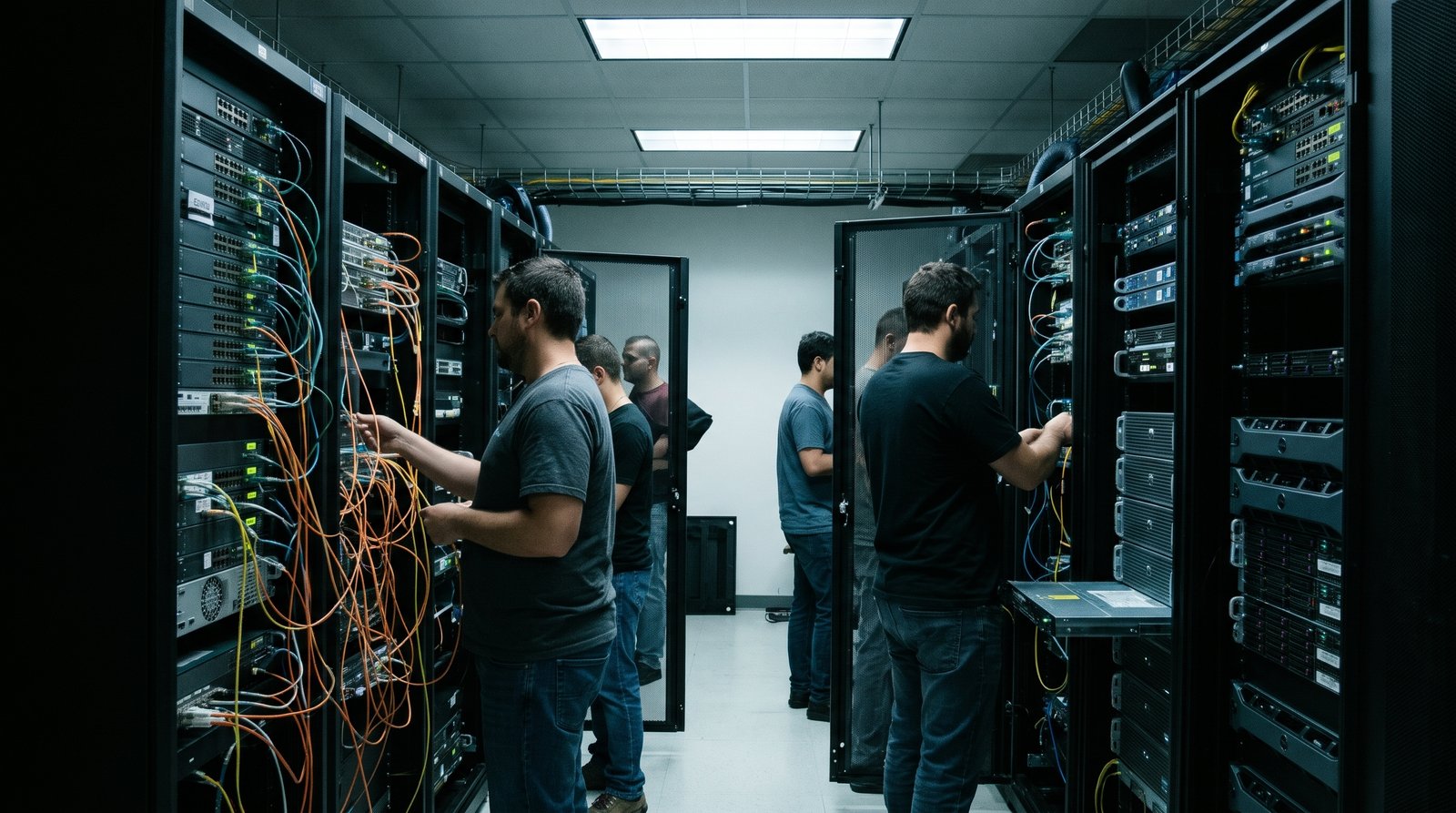
Follow the capital trail one layer deeper inside the data center, and you reach the specialized hardware making modern AI possible: accelerated computing processors.
Because traditional CPUs cannot process parallel neural network workloads efficiently, cloud operators and sovereign governments have raced to acquire specialized GPUs. NVIDIA emerged as the undisputed supplier of this foundational hardware, reporting approximately $130.5 billion in total revenue for its fiscal year ended January 2025âÂÂa historic surge driven overwhelmingly by data center chip demand.

However, seasoned market analysts point out two critical realities behind these numbers:
1. Hardware Sales vs. End-User ROI: NVIDIAâÂÂs record revenue reflects upfront capital spent during an aggressive global infrastructure buildoutâÂÂnot guaranteed profits for the software companies buying those chips.
2. A Complex Global Supply Chain: Producing cutting-edge AI accelerators depends on an intricate industrial web spanning semiconductor foundries, high-bandwidth memory manufacturers, extreme ultraviolet lithography machines, and precision packaging facilities.
In effect, one companyâÂÂs capital expenditure instantly becomes another companyâÂÂs revenueâÂÂcreating massive sales volume across the semiconductor sector long before end-user software proves its long-term return on investment.
Layer 4: Power Grids, Transformers, and the Physical Bottleneck
Beyond silicon chips and software code lies the most overlooked destination of the AI money trail: heavy industrial and electrical infrastructure.
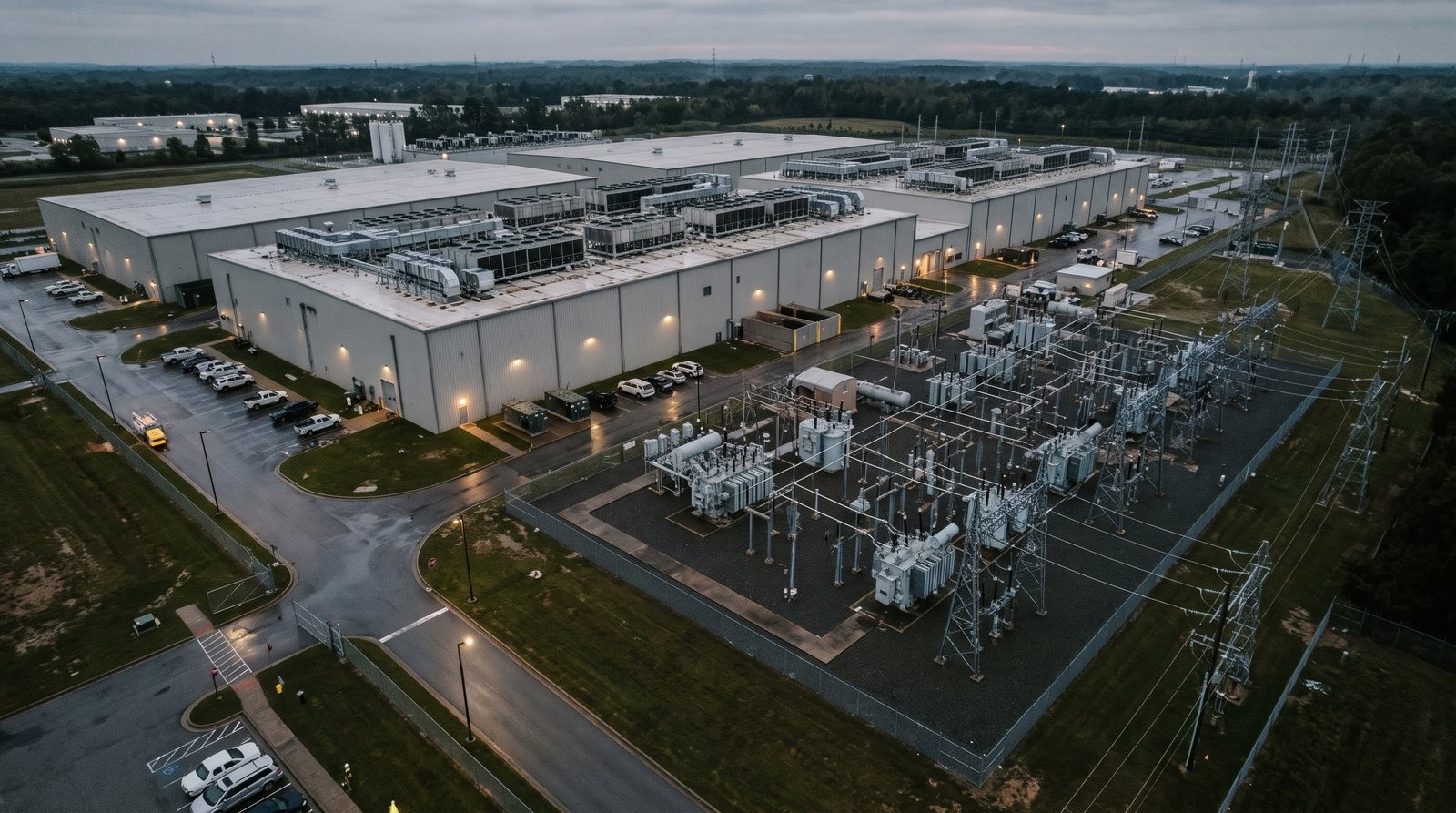
A modern AI data center is not a quiet office room filled with blinking servers. It is an energy-hungry industrial plant requiring vast land parcels, high-voltage electrical transformers, backup power generators, liquid cooling systems, and multi-year utility grid connections.
According to the International Energy Agency (IEA) Energy and AI Report, global data centers consumed an estimated 415 terawatt-hours (TWh) of electricity in 2024. Under the IEAâÂÂs base-case projection, data center electricity demand is set to more than double to roughly 945 terawatt-hours by 2030âÂÂa trajectory shaped by AI adoption speed, hardware efficiency gains, and power grid expansion.
Consequently, electric utilities, transformer manufacturers, industrial cooling engineers, and heavy construction firms have quietly become indispensable beneficiaries of the AI spending chain.
Comparing the Three Layers of the AI Economy
To see where financial value concentratesâÂÂand where hidden risk sitsâÂÂit helps to separate the AI ecosystem into three distinct business models:
1. AI Software & Application Layer
⢠Core Role: Customer-facing chatbots, coding assistants, and enterprise workflow apps
⢠Primary Revenue Driver: Monthly user subscriptions and API usage fees
⢠Key Financial & Operational Risk: High inference compute costs, customer churn, and intense price competition
2. Cloud Hyperscalers & Data Centers
⢠Core Role: Renting GPU server clusters, networking, and enterprise cloud storage
⢠Primary Revenue Driver: Long-term cloud compute contracts and hosting fees
⢠Key Financial & Operational Risk: Massive upfront CapEx and the risk of underutilized capacity if demand slows
3. Hardware, Cooling & Power Utilities
⢠Core Role: Chip designers, foundries, liquid cooling systems, and electric grid operators
⢠Primary Revenue Driver: Upfront sales of GPUs, transformers, industrial equipment, and electricity
⢠Key Financial & Operational Risk: Supply chain bottlenecks, cyclical hardware demand drops, and grid limits
The Central Question: Money Spent vs. Lasting Value
The defining economic illusion of the AI boom is treating money spent, top-line revenue collected, and sustainable operating profit as the same thing.
If artificial intelligence meaningfully transforms workplace productivity, lowers operational bottlenecks, and creates entirely new industries, todayâÂÂs multi-hundred-billion-dollar infrastructure buildout could generate historic returns for patient investors. Conversely, if algorithmic efficiency breakthroughs dramatically reduce compute requirementsâÂÂor if enterprise software adoption lags behind Wall Street forecastsâÂÂmany infrastructure spenders could face a much longer road to recovering their upfront capital.
Ultimately, the hidden story of the AI money trail is not that a single software app is getting rich. It is a massive reallocation of global capital away from lightweight digital interfaces and straight into the physical foundations of computing: silicon, steel, concrete, and electricity.
Frequently Asked Questions (FAQ)
Where does the money go when you pay for an AI subscription?
When you pay for an AI subscription, only a small fraction remains with the consumer-facing software company. The majority flows upstream to pay for cloud computing servers, specialized AI chips, data center cooling, electrical power, and ongoing model training expenses.
Why do many AI software companies struggle to make a profit despite high revenue?
Unlike traditional software where copying code costs almost nothing, every AI prompt requires real-time computation on expensive, power-hungry GPUs. High inference costs and massive upfront model training expenses mean high revenue does not automatically translate into net profit.
How much revenue did NVIDIA make from the AI infrastructure boom?
For its fiscal year ended in January 2025, NVIDIA reported approximately $130.5 billion in total revenue, driven overwhelmingly by global demand for accelerated computing processors used inside AI data centers.
How much electricity do global data centers consume?
According to the International Energy Agency (IEA), global data centers consumed an estimated 415 terawatt-hours (TWh) of electricity in 2024, with base-case projections rising to roughly 945 terawatt-hours by 2030.